
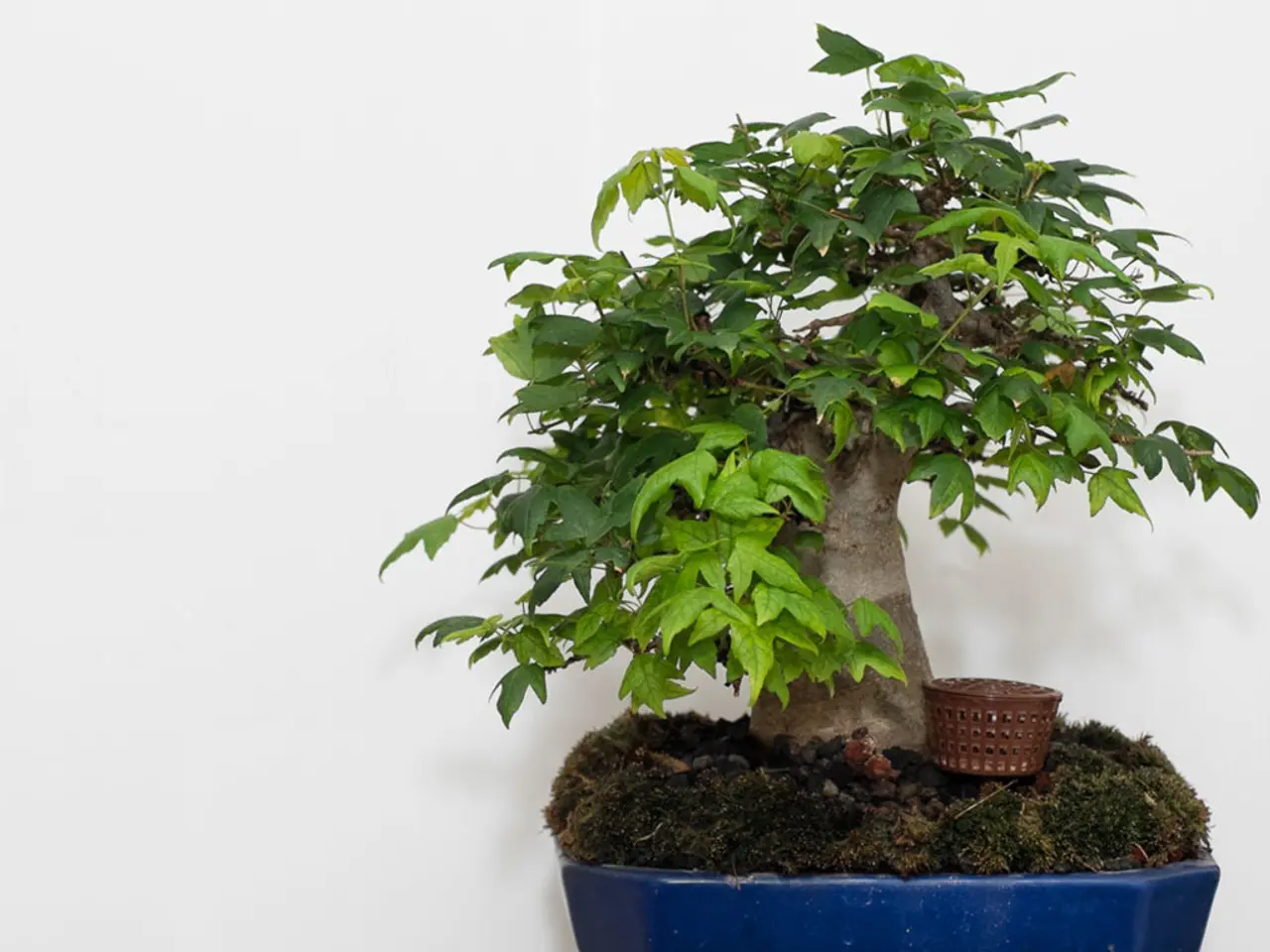
Nurturing and Maintenance Guidelines for Chinese Elm Bonsai Trees
Caring for Your Chinese Elm Bonsai Indoors: A Comprehensive Guide
The Chinese Elm Bonsai, a popular choice among both beginners and experienced hobbyists, is a versatile tree species that can thrive indoors with the right care. Here's a guide to help you understand its needs and ensure your Chinese Elm Bonsai remains healthy and thriving.
Temperature
Chinese Elm Bonsai trees prefer temperatures between 65°F (18°C) and 75°F (24°C) during the day, and slightly cooler at night, ideally not below 55°F (13°C). Keep the tree away from drafts and extreme temperature fluctuations.
Lighting
Provide bright, indirect light for your Chinese Elm Bonsai. Direct sunlight can dry out the tree too quickly, so a south-facing window with a sheer curtain is ideal. Ensure sufficient light to prevent weak growth and promote healthy leaf development, but avoid low light conditions.
Watering
Water your Chinese Elm Bonsai when the top inch of soil feels dry. Avoid overwatering, as this can lead to root rot. Use a well-draining soil mix to prevent waterlogging. In hotter or drier conditions, you may need to water more frequently.
Fertilizing
Use a balanced, water-soluble fertilizer during the growing season (spring to fall). Apply at half the recommended strength to prevent burning the roots.
Pruning
Regular pruning is essential for maintaining shape and encouraging new branches. Major pruning should be done in early spring before new growth begins. Use sharp, clean pruning tools to prevent spreading diseases. Remove dead or damaged branches before making shaping cuts.
Pest Control
Inspect your Chinese Elm Bonsai regularly for pests like spider mites, mealybugs, and scale. Use organic pest control methods whenever possible, such as neem oil or insecticidal soap. Preventing infestations includes regularly misting the tree and keeping humidity levels high.
Propagation
Chinese Elm Bonsai can be propagated using cuttings or air-layering. Cuttings are taken in spring when new growth is soft. Layering involves grafting a section of live stem onto another plant.
Repotting
Repot your Chinese Elm Bonsai every 2-5 years in early spring when it becomes pot-bound. Use a shallow pot with fresh, well-draining bonsai soil to prevent waterlogging. Trim the roots carefully to prevent damage during repotting.
By following these guidelines, you can keep your Chinese Elm Bonsai thriving indoors. In fall, the leaves turn vibrant shades of orange or yellow before falling off. Training techniques for shaping Chinese Elm Bonsai include wiring, clipping shoots, and using weights or guy wires. The ideal time to repot Chinese Elm Bonsai is in early spring, when roots are circling around the bottom of the pot or growing out of drainage holes. The Chinese Elm Bonsai is a semi-deciduous tree and will lose its leaves in the colder months. The tree requires adequate light, but direct sunlight can be harmful to the leaves and bark if temperatures are high.
The lifestyle and home-and-garden scenario can significantly benefit from understanding how to care for a Chinese Elm Bonsai indoors, considering its popularity among both beginners and experienced hobbyists as a versatile tree species suitable for indoor cultivation. By applying proper temperature, lighting, watering, fertilizing, pruning, pest control, propagation, and repotting methods, one can maintain a thriving indoors bonsai landscape.