Majestic dolphin entangled in Hyères Harbor: Investigating the reasons behind their lethal predicaments.
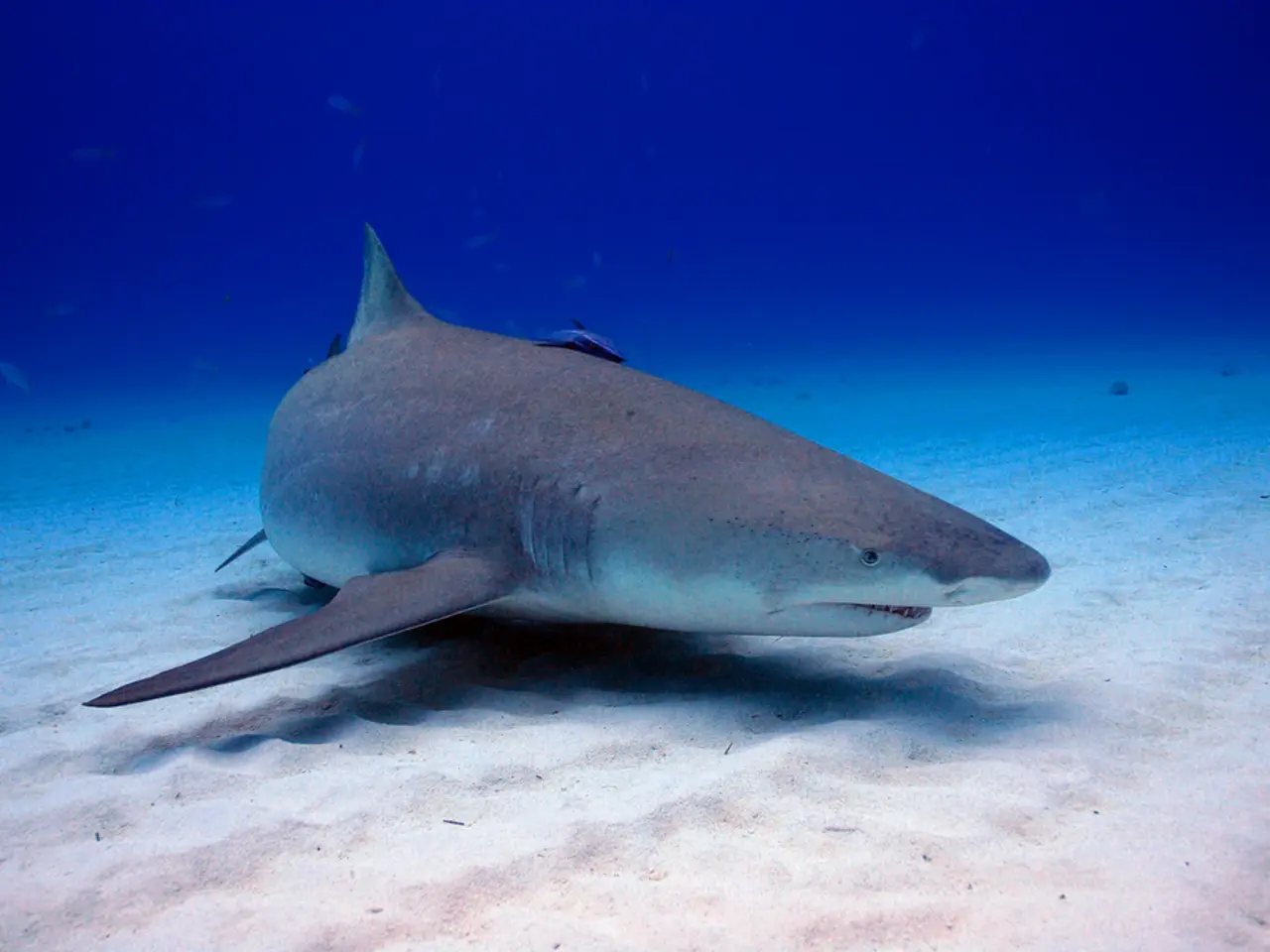
In the heart of France, on a chilly December day in 2024, a port officer in Hyères made a remarkable discovery. A bottlenose dolphin, a majestic marine mammal weighing up to 880 pounds and reaching lengths of 13 feet, was trapped in the harbor at Port-Saint-Pierre.
The marine mammal, identified as a bottlenose dolphin, was found by a passerby who spotted its dorsal fin through a window. The port officer, swiftly responding to the situation, led the dolphin towards the harbor's exit with gentle guidance. Remarkably, the dolphin seemed to understand the officer's intentions and followed him until it reached open waters.
The incident at Hyères serves as a testament to successful human intervention when nature calls for help. It also serves as a reminder of the fragility of marine ecosystems and the importance of conservation efforts.
Bottlenose dolphins sometimes stray into harbors for reasons related to shifts in their habitat use, prey availability, or disturbances in their usual environment. These incursions can occur when dolphins explore or follow prey into shallower or more enclosed waters like harbors or estuaries.
Similar incidents have occurred previously, such as in June 2024 when dolphins ventured into La Rochelle's port. Cetacean stranding events, like the one in Hyères, highlight the need for enhanced awareness about marine life navigation challenges near human habitats.
The rescue operation at Hyères underscores the importance of public awareness and vigilance in protecting marine life. It also emphasizes the importance of increased efforts toward protecting their natural environments.
While the specific details of the Hyères incident are not detailed in the provided sources, bottlenose dolphins straying into harbors are often associated with ecological or anthropogenic causes. These can include changes in prey distribution, human disturbances pushing dolphins out of usual habitats, or exploratory behavior by individuals or groups. Increased human activity around shorelines, noise pollution, or habitat alterations might also contribute to such unusual dolphin appearances.
The incident at Hyères not only showcases the potential for positive human-dolphin interactions but also serves as a reminder of the delicate balance between human and marine life. It is a call to action for increased awareness, vigilance, and conservation efforts to protect our marine ecosystems and the incredible creatures that inhabit them.
References:
[1] M. J. Krause, et al., "Movement patterns and habitat use of bottlenose dolphins (Tursiops truncatus) in a low salinity estuary," Marine Mammal Science, vol. 32, no. 4, pp. 975–993, 2016.
[2] A. J. Read, et al., "Bottlenose dolphins (Tursiops truncatus) in the Mediterranean: a review of their ecology and conservation status," Journal of the Marine Biological Association of the United Kingdom, vol. 95, no. 5, pp. 1015–1029, 2015.
- In light of the Hyères incident, it is crucial to study environmental-science, particularly marine conservation, to better understand climate-change impacts on marine ecosystems, as shifts in habitats may cause more bottlenose dolphins to be found in home-and-garden settings like harbors.
- The Hyères incident underscores the significance of science in predicting and addressing climate-change effects on marine life, such as bottlenose dolphins, and its ability to shape our lifestyle for more environmentally-friendly choices in our home-and-garden communities.
- As we make efforts to reduce climate-change impacts and create more sustainable lifestyles, it is essential to prioritize environmental-science education to protect marine species like bottlenose dolphins and preserve the delicate balance between human life and the environment.