
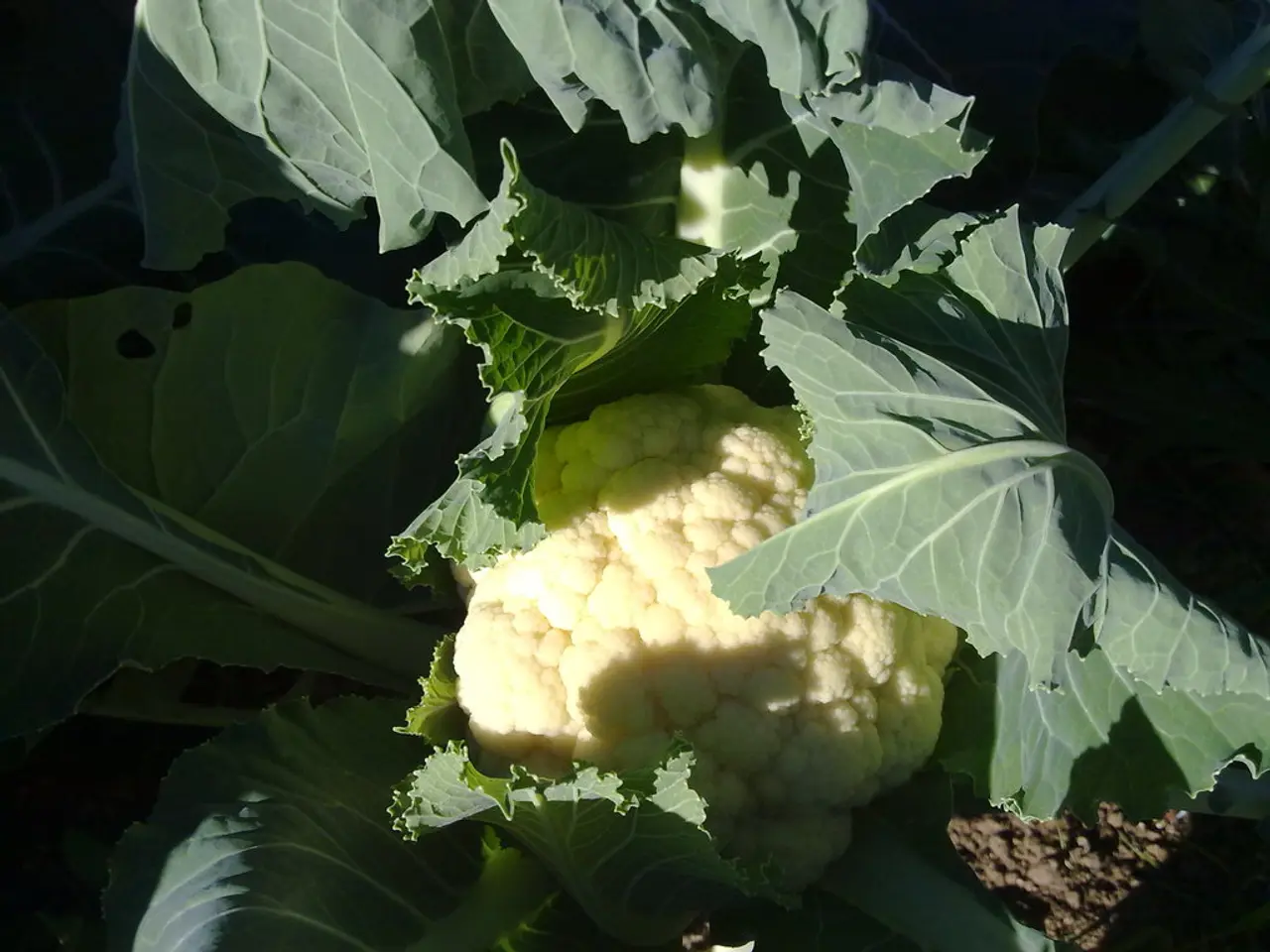
Growing Cauliflower: Exploring Planting and Harvesting Timelines
Cauliflower, a versatile and nutritious vegetable, is a popular choice for gardeners worldwide. Known for its snowy white heads and nutritional prowess, cauliflower thrives in the right conditions.
Firstly, cauliflower needs nitrogen-rich soil to grow well. Aged manure or compost can be added to prepare the bed for planting. The soil should be rich in organic matter and well-drained. Spacing is essential; cauliflower seedlings should be placed about 18-24 inches apart, and rows approximately 3 feet apart.
Cauliflower is a cool-weather crop that prefers cooler temperatures. In spring, seeds should be started indoors 6-8 weeks before transplanting, and transplanting should occur when the soil is workable and temperatures are still cool. This is typically from late winter to early spring, depending on your zone.
For a fall crop, seeds should be started indoors in mid-summer or direct-sowed outdoors in late summer to early fall. In many zones, this means planting from mid-July to mid-September to harvest in fall or early winter. The ideal planting times for cauliflower varieties depend on the climate zone and the season you want to grow.
In hot climates, plant cauliflower in the cooler months—October or November—to grow through winter. In mild or higher elevation areas, spring and summer planting can also be productive. Some cauliflower varieties, like "Snowball Y" and "Candid Charm," are self-blanching and suited for these schedules, but some tolerate temperature extremes better.
Harvesting cauliflower should be done when the heads are firm and compact, usually 6 to 8 inches in diameter, and a creamy white. The best way to harvest is in the morning when the heads are cool and hydrated. After harvesting, cauliflower heads should be cooled as soon as possible to extend freshness.
Cauliflower is a nutritional powerhouse, containing a bounty of florets that boast a nutritional profile as vibrant as their hues. Rich in vitamins C, K, and B6, fiber, magnesium, potassium, and more, cauliflower can be used in a variety of dishes, such as cauliflower rice, soups, and salads.
Regular inspections and organic controls like soapy water for aphids are recommended for pest control. Removing diseased leaves quickly can help prevent the spread of disease. Blanching is pivotal in cauliflower cultivation to ensure the white crowns and prevent bitterness.
For immediate use, wrapped cauliflower heads can be refrigerated for up to a week without washing. With its versatility in the kitchen and vibrant color options, including white, purple, yellow, orange, green, and romanesco, cauliflower is a delight for gardeners and cooks alike. The ideal soil pH for cauliflower is between 6.5 and 6.8.
[1] Gardening Know How. (2021). How to Grow Cauliflower. [online] Available at: https://www.gardeningknowhow.com/edible/vegetables/cauliflower/growing-cauliflower.htm
[2] The Spruce Eats. (2021). How to Grow Cauliflower. [online] Available at: https://www.thespruceeats.com/how-to-grow-cauliflower-3029774
[3] The Old Farmer's Almanac. (2021). Cauliflower. [online] Available at: https://www.almanac.com/plant/cauliflower
[4] Fine Gardening. (2021). Growing Cauliflower. [online] Available at: https://www.finegardening.com/article/growing-cauliflower
[5] University of Illinois Extension. (2021). Cauliflower. [online] Available at: https://extension.illinois.edu/vegetables/growing/cauliflower.cfm
- Embracing afood-and-drink lifestyle, one can find numerous delicious recipes using cauliflower, such as cauliflower rice, soups, and salads, highlighting its nutritional benefits, which include vitamins C, K, and B6, fiber, magnesium, potassium, and more.
- For those interested in home-and-garden projects, learning how to grow cauliflower can be a rewarding addition to your lifestyle. Planting in cooler temperatures and providing nitrogen-rich soil are essential while growing this versatile vegetable.