Display of Ivory Boxes Linked to Male Names: National Museum Exhibits Personal Collection for Initial Unveiling
## Unveiling the Hohenzollern-Sigmaringen Archaeological Collection: A Journey Through Time
### Discovering the Past in Stuttgart
The Hohenzollern-Sigmaringen archaeological collection, a treasure trove of historical artifacts, is now open to the public at the Württemberg State Museum in Stuttgart. This remarkable collection, which has been hidden from view for over a century, offers a captivating glimpse into the rich history and cultural heritage of the region.
### The Collection's Origins
The Hohenzollern-Sigmaringen collection was created in the 19th century by the Princes of Hohenzollern-Sigmaringen. With roots dating back to the 11th century, the family's castle in Gammertingen has been a symbol of power and culture for centuries. The collection reflects the family's passion for collecting and their scientific curiosity, showcasing objects from the Stone Age to the early Middle Ages[3].
### The Exhibition: "Passion and Research"
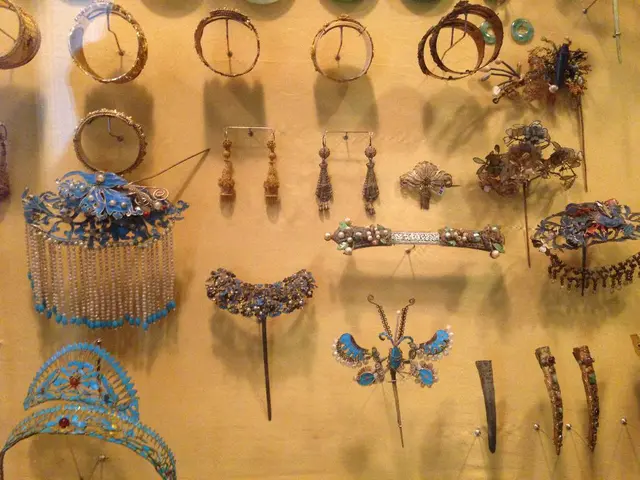
The State Museum of Württemberg is presenting parts of the Hohenzollern-Sigmaringen collection for the first time in the exhibition "Passion and Research. The Archaeological Collection Hohenzollern". The exhibition, which features around 100 extraordinary objects, offers a unique opportunity to explore the history of the collection and its significance[4].
### Highlights of the Collection
One of the most intriguing objects on display is an ivory figurine, dating back to the 6th century. This figurine, believed to have originated from the Mediterranean region, features runes and a man's name on its bottom[5]. Another highlight is the Helmgraves of Gammertingen, which were acquired by the State Museum of Württemberg in 2015 and are now on display in the Old Castle[6].
### The Collection's Importance
The Hohenzollern-Sigmaringen collection is considered one of the most important private collections in Southwest Germany. As curator Klaus Georg Kokkotidis notes, it provides valuable insights into historical cultures and societies[7]. The collection's acquisition by the State Museum of Württemberg was supported by the Ministry of Science, Research and the Arts and the Cultural Foundation of the Länder[8].
### Accessibility and Engagement
The exhibition is free of charge and offers a digital companion through the LMW App, available in multiple languages and formats. This accessibility ensures that a wide audience can engage with the collection's historical narratives and artifacts[1].
### A Cultural Legacy
The Hohenzollern-Sigmaringen collection serves as a testament to the family's passion for collecting and their commitment to preserving the region's cultural heritage. As private collections like this one continue to shape our understanding of historical cultures and societies, they remind us of the enduring value of preserving our past for future generations.
[1] https://www.lmw.de/en/exhibitions/passion-and-research-the-archaeological-collection-hohenzollern [2] https://www.schloss-hohenzollern.de/en/ [3] https://www.lmw.de/en/collections/archaeology [4] https://www.lmw.de/en/exhibitions/passion-and-research-the-archaeological-collection-hohenzollern [5] https://www.lmw.de/en/exhibitions/passion-and-research-the-archaeological-collection-hohenzollern [6] https://www.lmw.de/en/collections/archaeology [7] https://www.lmw.de/en/exhibitions/passion-and-research-the-archaeological-collection-hohenzollern [8] https://www.lmw.de/en/collections/archaeology
The Hohenzollern-Sigmaringen collection's historical artifacts provide a fascinating insight into the region's cultural heritage, offering a glimpse into the country's rich history. Despite its initial being a private collection, the family's devotion to preserving their home-and-garden relics has played a significant role in shaping our understanding of the past. Over time, these artifacts have evolved into a valuable contribution to Southwest Germany's home-and-garden and lifestyle narratives, transcending the personal domain into a shared cultural legacy.